Your toothbrush head lives in the least sterile room of your house, inches from a flushing toilet, damp for hours at a time. That reality — plus the discovery that toothbrushes can harbor significant bacterial loads — made UV-C sanitizers a fast-growing category. The honest answer to "do they work" is: yes, within limits, and those limits matter.
What Your Toothbrush Head Actually Hosts
Studies sampling used toothbrushes routinely find streptococci, staphylococci, and assorted environmental bacteria. Most come from your own mouth (where they already live), the bathroom air, and contact with other brushes. For healthy people, the body handles this exposure comfortably — your mouth is not a sterile environment and never will be.
The concern is twofold: re-introducing bacteria at high concentration into gums that are already inflamed, and sharing a bathroom with people whose oral bacteria are not yours. Both are real reasons to keep brush heads hygienic.
What UV-C Light Does
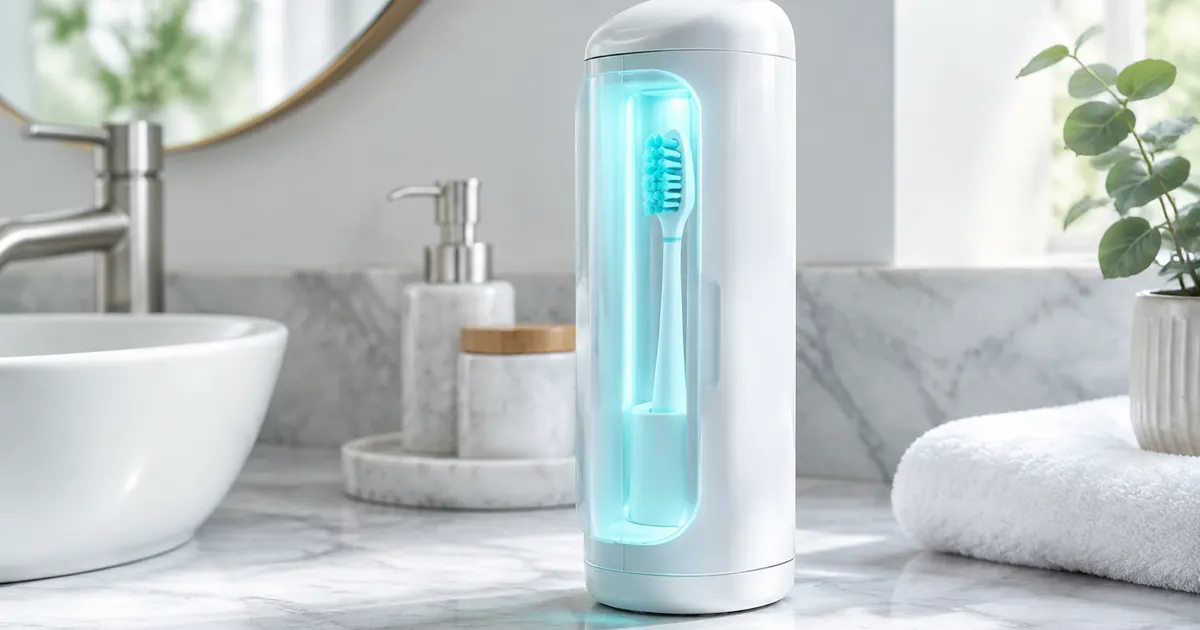
UV-C light in the 254–280 nanometer range damages bacterial DNA and renders bacteria non-viable. It is the same principle used to sanitize water and hospital surfaces. A portable UV-C toothbrush sanitizer applies it directly to the brush head, and testing shows meaningful reductions in bacterial load after a full cycle.
The keyword is reduction, not sterilization. Shadowed areas — bristle bases, under the head where it mounts — receive less light. A sanitizer is a strong second line of defense, not a force field.
What UV-C Cannot Do
- It cannot clean a dirty head. Organic residue shields bacteria from light. Rinse the head first; sanitize second.
- It cannot restore worn bristles. A three-month-old frayed head is a mechanical problem, not a microbial one.
- It cannot make an expired brush new. The three-month replacement rule stands regardless of sanitizing.
The Hygiene Routine That Actually Works
- Rinse the head thoroughly after brushing — hot water, bristles down, until no visible residue remains.
- Dry it ventilated. Bacteria love damp. A ventilated holder that keeps heads separated and upright beats a closed medicine cabinet.
- Sanitize on a schedule. A UV-C sanitizer with USB-C power runs a full cycle in minutes; daily is plenty.
- Never share a brush head — and keep family members' heads from touching each other in the holder.
- Replace quarterly. Sanitizing extends the hygiene of a head, not its lifespan.
Other Ways People Try to Sanitize (and How They Compare)
Microwaving a wet brush head distorts bristles and melts parts — never. Dishwashing degrades the head and leaves detergent residue. Soaking in mouthwash adds alcohol exposure without meaningful disinfection and can degrade bristle glue. Hydrogen peroxide soaks reduce bacteria but also degrade bristles with repeated use. UV-C in a proper chamber is the only method that combines real microbial reduction with zero bristle damage — which is why it became the category standard.
Electric Brush Heads Need This Most
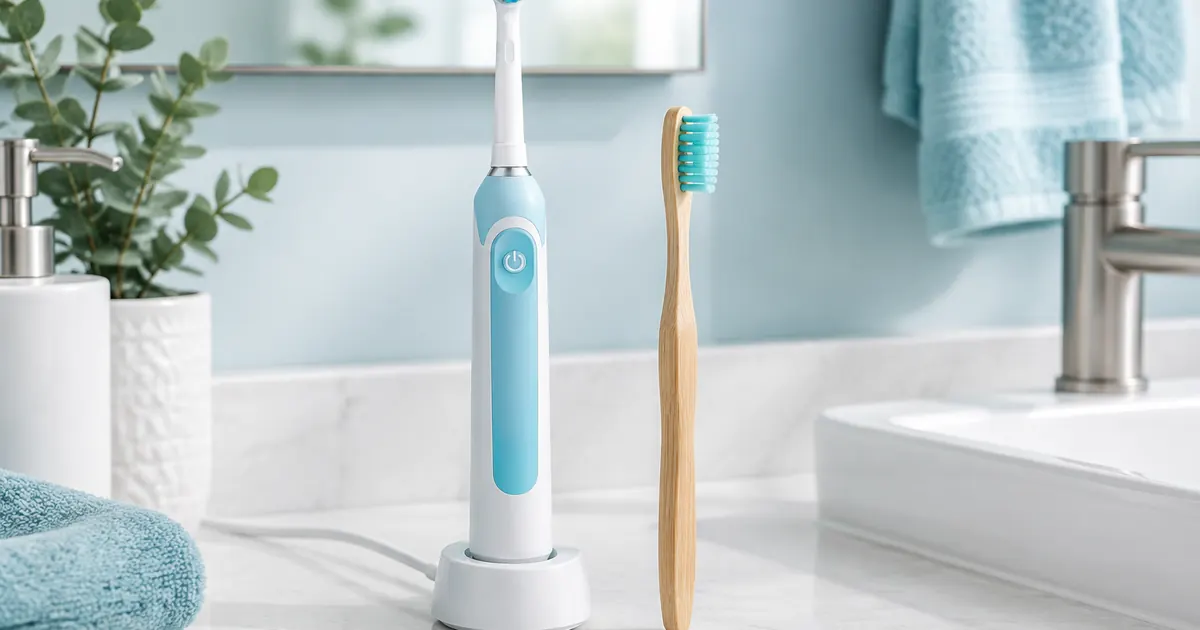
Electric heads have more surface geometry — dense bristle tufts, rubber pads, oscillating bases — that traps moisture and residue. If you use a compact electric brush, popping the head into a sanitizer after rinsing takes seconds and meaningfully extends the fresh feel of the head.
Travel: The Highest-Value Use Case
A sealed, damp brush head inside a luggage pocket is a bacteria greenhouse. This is where sanitizers and ventilated cases earn their keep: a slim travel case with ventilation for the journey, and a UV-C cycle at the hotel for the head. For frequent travelers, that combination is worth the counter space.
Sanitizer Features Worth Paying For
The category has its own marketing noise, so here is what separates a good unit from a gimmick. Enclosed chamber: UV-C only works on surfaces it reaches — a closed box with reflective interior sanitizes far more thoroughly than an open wand. Genuine UV-C emission: the useful wavelength is 254–280nm; cheap blue LEDs are not UV-C, whatever the listing says. USB-C power: one cable standard across the bathroom. Auto-shutoff: the light should never run with the lid open — UV-C is harmful to eyes and skin with direct exposure.
Battery claims of "99.9% germ elimination" deserve the same skepticism here as anywhere: real-world reductions depend on exposure time, distance, and shadows. A well-designed chamber achieves substantial reductions; a toy achieves a nice glow.
The Honest Verdict
UV-C sanitizers do what their science says: reduce bacterial load on brush heads with light that damages bacterial DNA. They are most valuable for electric brush heads, shared bathrooms, and travel. They complement — never replace — the fundamentals: rinse, ventilate, and replace every three months. Browse our sanitizers and accessories to build the routine.