Ask a dental hygienist which daily habit patients skip most, and the answer is not brushing — it is cleaning between teeth. Yet that is where most gum disease and a huge share of cavities begin: in the gaps a toothbrush head physically cannot enter. Interdental brushes are the tool built for those gaps, and for most adults they outperform string floss. Here is why, and how to start.
Why Brushing Alone Fails Between Teeth
A toothbrush — manual or electric — cleans surfaces it can touch. The contact points between teeth are sealed by neighboring teeth, so plaque in those spaces matures undisturbed. Within about 48 hours it hardens enough to irritate gums; within weeks it calcifies into tartar that only professional cleaning removes.
Between-teeth cavities are also the sneaky kind: they start below the contact point, invisible in the mirror, and often only show on X-rays once significant. Prevention is dramatically easier than restoration here.
Interdental Brushes vs. String Floss
For gaps wider than the tightest contact, clinical evidence favors interdental brushes: the bristled brush scrubs the sides of both teeth (and any gum tissue in the space) with mechanical action, while floss mostly slides through without contacting the tooth curves. Independent reviews find interdental brushes remove more plaque and reduce gingivitis more than floss where both fit.
Floss still wins for the tightest contacts where even the smallest brush will not pass — which is why many people use both: interdental brushes in 0.7mm and larger for most gaps, floss for the two or three tight ones.
Choosing Your Sizes
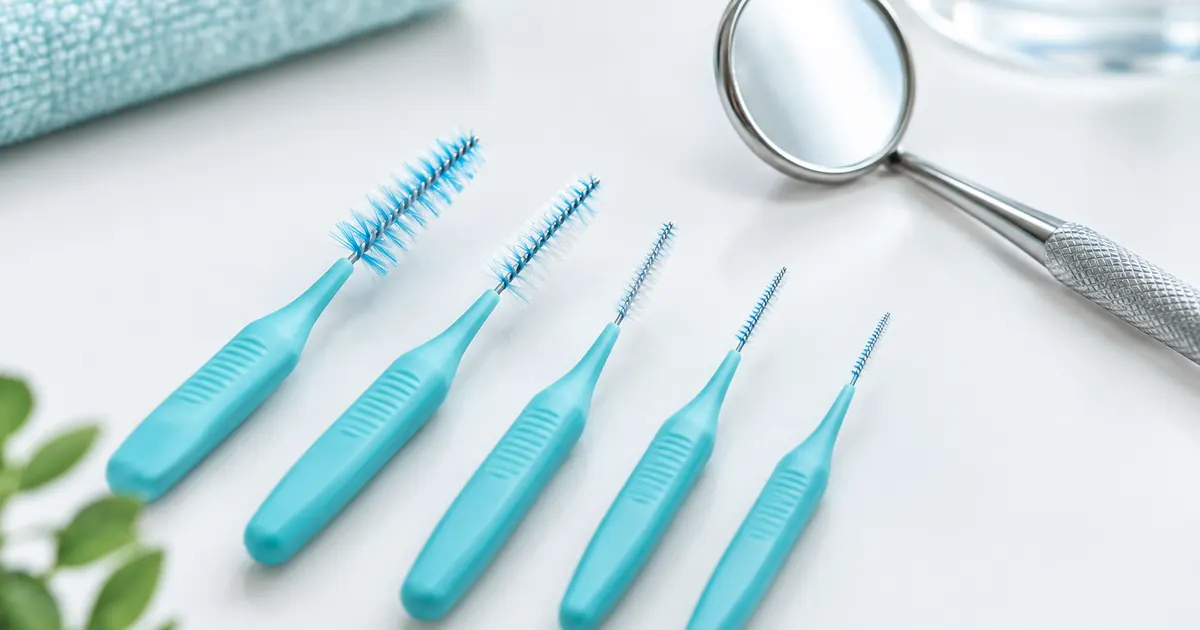
Interdental brushes come in graduated sizes, and the right size is the largest that slides through the gap with light resistance — too small cleans poorly, too large will not fit and can hurt the gum papilla between teeth.
- Tight gaps: 0.6–0.7mm — the standard starting size for most adults.
- Moderate gaps: 0.9–1.1mm — common between molars, where gums have already receded slightly.
- Wide spaces: 1.3mm+ — often needed with gum recession, bridges, or orthodontic appliances.
Most people need two or three different sizes across their mouth — molars run wider than front teeth. A multi-pack set with flexible wire cores lets you find your sizes without buying eight separate packets.
Technique: 30 Seconds, Once a Day
- Once a day is enough — before or after your evening brush. Plaque needs disruption every 24 hours to prevent maturing.
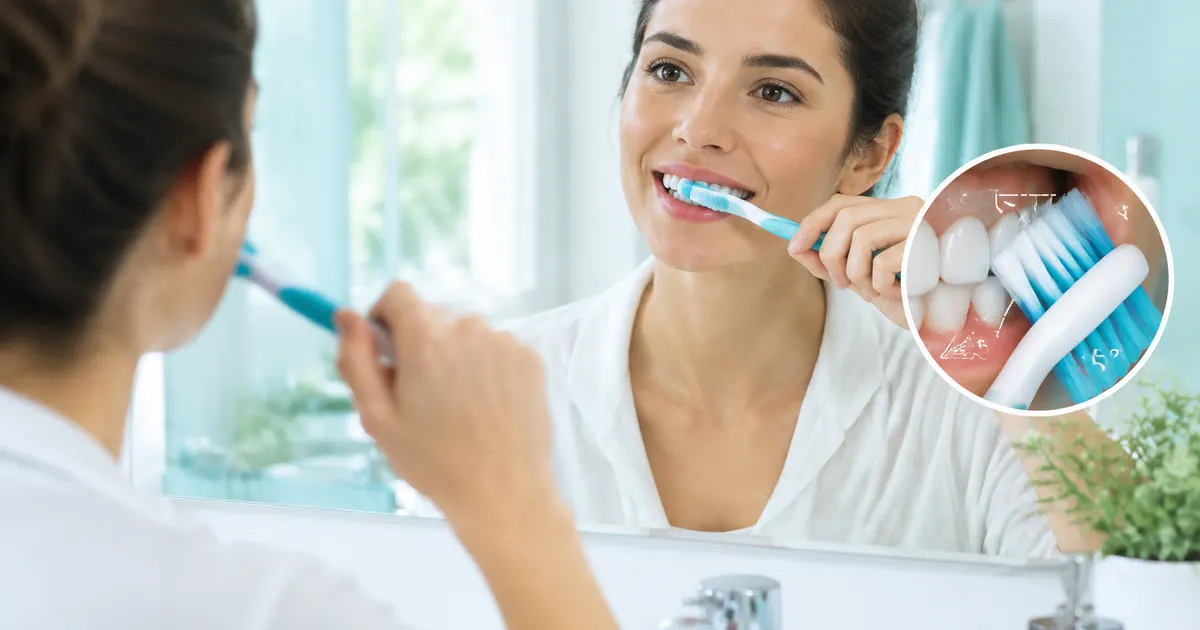
- Insert with light pressure, bristles angled into the gap, working from the outer side of the teeth.
- Push through to the other side and pull back — a straight pass, not a sawing motion. The goal is contacting both tooth surfaces.
- Rinse the brush between gaps and reuse the same brush until the wire fatigues or bristles wear (typically one to two weeks of daily use).
- Expect a little blood the first week. Inflamed gums bleed when first cleaned; within a week of daily cleaning, the bleeding typically stops. Persistent bleeding after two weeks deserves a hygiene visit.
Special Situations
Braces: interdental brushes are the only practical way to clean under wires — a V-trim orthodontic brush handles the brackets while interdental brushes handle underneath. Implants and bridges: a specialized implant care brush cleans the critical implant-gum junction. Dentures: a denture brush with dual heads cleans prosthetic surfaces without scratching them.
Common Mistakes With Interdental Brushes
Forcing a too-large brush through a tight gap — this cuts the gum papilla and teaches your brain that the tool hurts. Size down and build up. Sawing back and forth like flossing — the brush works on the push-through and pull-back, not friction. Skipping the back teeth because access is harder — the molars are exactly where the widest gaps and most gum disease live; a compact end-tuft brush helps reach the very back. Reusing until the wire rusts — replace when bristles splay or the wire fatigues, typically every one to two weeks of daily use.
One more: do not rinse with mouthwash immediately after interdental cleaning "to finish the job." The mechanical disruption is the work; the mouthwash is optional garnish.
The Habit That Pays for Itself
Pair it with an existing habit — after the evening brush, while the TV show queues — and the 30 seconds disappears into the routine.
Thirty seconds of interdental cleaning a day is the cheapest dental insurance available: it prevents the between-teeth cavities that become crowns and the gum inflammation that becomes bone loss. Start with one size, learn the motion, then build your set. Browse our specialty and interdental care collection to get equipped.